Graphic
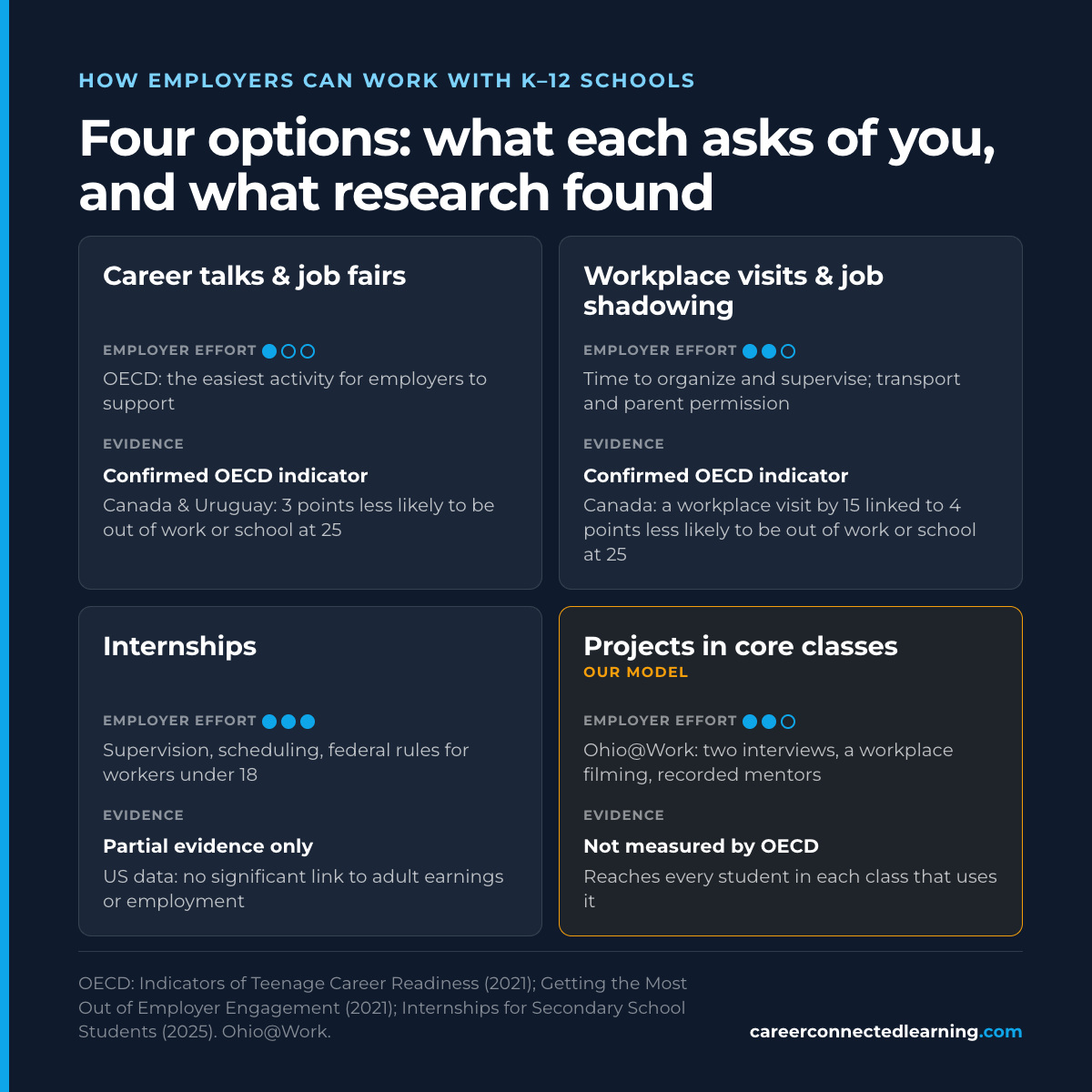
Four ways employers can work with K–12 schools
Career talks, job shadowing, internships and classroom projects compared on what they ask of employers and what OECD research found.
Sources
From the articleHow Employers Can Partner With K–12 SchoolsCareer talks, job shadowing, internships and classroom projects compared: what each asks of an employer, what research found, and the rules for students under 18.- OECD, Indicators of Teenage Career Readiness: Guidance for Policy Makers (2021)
- Covacevich et al., Indicators of Teenage Career Readiness, OECD Education Working Paper No. 258 (2021)
- OECD, Getting the Most Out of Employer Engagement in Career Guidance (2021)
- OECD, Internships for Secondary School Students in General Education (2025)
- Ohio@Work, ohioatwork.com